ABCO Transportation, Inc., a refrigerated freight haulder based in Dade City, Florida, has a chronically unsatisfactory record with the Federal Motor Carrier Safety Administration with regard to unsafe driving violations. In my experience as a trucking trial attorney, when a trucking company has a record as bad as ABCO, often there are issues of management turning a blind eye to safety.
In ABCO’s case, this bad safety record culminated in a tragic crash on Wednesday on Thornton Road in Douglas County, Georgia, when an ABCO truck driver ran a red light, taking the lives of two co-workers at AutoTrader.com (a Cox Enterprises subsidiary) and injuring four others.
I was in Chattanooga, at the office of another trucking trial attorney, when I got a message to return a call from the family of two of the injury victims who had been referred by their family’s attorney in another state.
ABCO’s record with the Federal Motor Carrier Safety Administration shows unsafe driving violations with a 74.3 percentile score. Anything over 60th percentile is unsatisfactory. In the past two years, ABCO had 81 reported unsafe driving violations, and has rated unsatisfactory for unsafe driving violations for every reporting period since December 2010. That is probably the tip of the iceberg, as it only indicates the times they got caught.
Specific reported violations include:
– Failure to obey traffic control device, 8 violations – Following too close, 11 violations – Improper lane change, 3 violations – Lane Restriction violation, 5 violations – Improper passing , 1 violation – Reckless driving, 1 violation – Speeding, 14 violations – Speeding 15 or more miles per hour over the speed limit, 4 violations – Speeding work/construction zone, 4 violations
In 2011 and 2012, ABCO has had 18 reported crashes, 8 of which involved injuries, with a total of 17 people injured. These include:
– 6/22/12, Pennsylvania, 2 injured – 12/9/11, New York – 12/2/11, Ohio – 11/29/11, Colorado – 11/2/11, New York, 1 injured – 10/11/11, Virginia – 9/9/11, Missouri – 4/27/11, Kentucky – 4/7/11, Florida, 1 injured – 3/5/11, Alabama – 2/10/11, Virginia, 7 injured – 1/20/11, Ohio – 11/23/10, Florida, 1 injured – 11/3/10, Indiana, 1 injured – 10/25/10, Ohio – 8/29/10, Texas, 1 injured – 7/31/10, Virginia, 3 injured – 7/9/10, Connecticut
Regarding fatigued driving, one of the most common underlying causes of truck crashes, ABCO is right at the threshold for an unsatisfactory rating — 59.8 percentile when anything over 60 percentile is considered unsatisfactory. ABCO was over the 60 percentile threshold for unsatisfactory driver fatigue rating for 4 of the past 6 reporting periods. Reported violations only indicate when they got caught, so they are normally the tip of the iceberg. Violations include:
– False report of driver’s record of duty status, 8 (lying about driver logs)
– Requiring or permitting driver to drive more than 11 hours, 8 violations – Requiring or permitting driver to drive after 14 hours on duty, 20 violations
It was with that background that an ABCO Transportation tractor-trailer operated by 64-year-old Robert John Sansom, of Colorado ran a red light on Thornton Road in Douglas County, Georgia, on Wednesday, July 11th. Two women on their lunch break were killed — Tracy Downer and Michelle Chinnis, both of whom in sales for AutoTrader.com, a website owned by Cox Enterprises. Four other people were injured in the crash . According to an article by Alexis Stevens in the AJC, Downer previously worked in advertising at the AJC from 1993 to 2010, was married with a son and a daughter, and Chinnis is survived by a 16-year-old daughter.
Victims and their families may choose separate attorneys or joint representation in such instances of serious personal injury or wrongful death, as this is a potential conflict that may be waived in writing after informed consent pursuant to Georgia Rule of Professional Conduct 1.7.
Whenever there are multiple victims of a crash such as this one, it is important to coordinate representation. Most recently, we were involved in the joint prosecution group coordinating representation of member of the Bluffton University baseball team arising from a bus crash in Atlanta in 2007. Where there are no substantial indications of fault on the part of any of the victims, the only potential conflict among them is generally concern about adequacy of insurance coverage and assets to cover all claims.
The Federal Motor Carrier Safety Administration website only shows for ABCO a $1,000,000 liability policy with Protective Insurance Company. However, an interstate motor carrier with 174 trucks is likely to carry an excess liability insurance policy with considerably higher limits, perhaps an additional $5,000,000 to $20,000,000. That information is not public and generally is reliably documented only in litigation.
Continue reading →
 Georgia Truck Accident Attorney Blog


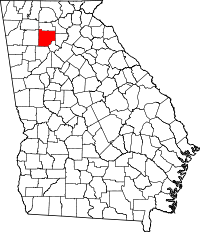 Last week in Cherokee County, a Comcast truck failed to stop behind a car that had stopped to turn, went into the opposite lane, and struck head-on an oncoming car, killing the driver.